


Earwig Control in Richmond, VA
A Local Team with Over a Decade of Virginia Pest Experience
Earwigs aren’t a pest most people expect to deal with indoors, but Richmond’s hot, humid summers make them a recurring problem around foundations, crawlspaces, and gardens throughout the region. Landlock Pest Control has been treating earwigs and more than 170 other pests across Virginia for over a decade, and we know the local conditions that keep bringing them back. Every service starts with a free inspection, and same-day assistance is available when the situation is urgent. Bilingual support in English and Spanish is also available.
If earwigs have made their way into your Richmond home or business, we’re ready to help. Call (757) 906-5380 to schedule your free inspection or request same-day service.
Why Earwigs Show Up in Richmond Homes
Earwigs are dark reddish-brown insects, roughly half an inch to three-quarters of an inch long, with a distinctive pair of pincer-like appendages called cerci at the rear of their abdomen. Those pincers look alarming, but earwigs aren’t venomous and don’t pose a health threat. They do become a persistent nuisance, though, when populations grow large enough to move indoors.
They thrive in damp, shaded environments: mulch beds, garden debris, and soil along foundation lines are prime harborage sites. Richmond’s summer humidity accelerates activity, and when outdoor conditions swing too dry or too wet, earwigs follow moisture gradients through small gaps near doors, windows, and foundation cracks. Once inside, they gravitate toward bathrooms, basements, laundry rooms, and utility areas.
Signs an infestation warrants professional attention:
- Repeated indoor sightings in damp rooms rather than an occasional wandering bug
- Irregular holes or feeding damage on garden plants, flowers, or seedlings
- Small dark droppings resembling pepper grains near active zones
Occasional earwigs aren’t unusual. Seeing them regularly indoors usually means a larger population is established outside and has found reliable ways in.
How We Treat Earwigs in Richmond
We begin every job with a thorough free inspection. Our technicians assess harborage sites around your foundation, identify entry points, and evaluate moisture conditions that may be sustaining the population. That inspection shapes everything that follows.
Exterior & Interior Treatment
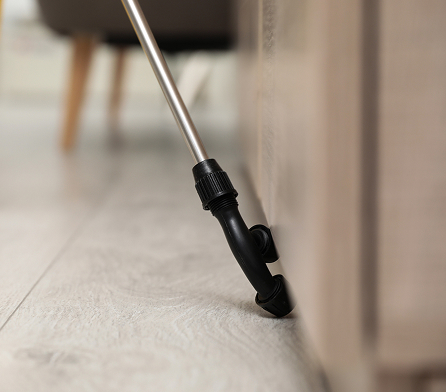
Earwig control is most effective when it starts outside. We focus treatment along the exterior perimeter, targeting foundation lines, mulch beds, drainage areas, and shaded ground cover where infestations originate. Indoor treatment addresses damp rooms and confirmed sighting areas, and we assess entry points, including door sweeps, weep holes, and utility penetrations. The goal is reducing active populations and limiting new intrusions, not just clearing the bugs you can see.
We use eco-friendly products and integrated pest management (IPM) techniques throughout, with treatments designed to account for people, pets, and property. Every service conversation includes prevention recommendations: moving mulch and firewood away from the foundation, improving drainage, and sealing cracks around doors and windows.
Moisture Control & Long-Term Prevention
Because earwigs are strongly tied to moisture, properties with damp or poorly ventilated crawlspaces often face recurring activity even after perimeter treatment. Our crawlspace moisture control services address those underlying conditions directly. For Richmond homeowners dealing with persistent earwig pressure, pairing treatment with a moisture management strategy can be an important part of reducing the conditions that support returning populations season after season.
We offer monthly, bi-monthly, or quarterly treatment plans so you can choose the schedule that fits your property and your goals. We serve Richmond and the surrounding communities, including Midlothian, Henrico, and Chesterfield.
Why Richmond Residents Choose Landlock Pest Control
We’re a local company, not a national chain, and that distinction shapes how we work. We pay attention to each property’s specific conditions and build service relationships based on trust rather than volume. Our technicians bring more than 10 years of experience treating pests across Virginia and the broader Southeast, including the regional knowledge that comes with working in Richmond’s climate year after year.
Our credentials reflect that commitment. We’re Better Business Bureau-accredited, recognized by HomeAdvisor and Angi, and certified by the National Pest Management Association, Virginia Pest Management Association, and Tidewater Pest Control Association. Our team also holds Termidor certification, a standard that reflects a high level of treatment training. Free inspections and quotes are provided before any work begins, so you know what to expect.
Schedule Your Free Earwig Inspection in Richmond
If earwigs are showing up regularly in your home or business, the right time to act is now. Populations grow through the warm months, and addressing harborage and entry conditions early can support longer-term control efforts. Same-day service is available for urgent situations, and Spanish-language support is available if you need it.
Call (757) 906-5380 to schedule your free earwig control inspection in Richmond. Landlock Pest Control is ready to help.
Our FAQ
Have questions? We are here to help. Still have questions or can't find the answer you need? Give us a call at 757-906-5380 today!
-
Most homeowners benefit from quarterly treatments, but homes with severe infestations may need monthly service.
-
Yes. We use EPA-approved products and apply them so they are safe for families and pets once dry.
-
While using an over-the-counter product may help stop a current pest problem, it will not help prevent against pest problems in the future. If you are not experienced in pesticides, applying treatment on your own can be very unsafe for kids, pets, or even adults if not handled properly. Also, in most cases, pests will return unless you take the appropriate measures to prevent them. In as little as 30 days you can start to notice new infestations if not treated properly.